Trending · Google searches
Leonid Meteor Shower Tonight: Peak Time and Where to Look
The Leonids peak on the night of November 17–18, 2026. The best hours to look in the US, UK and Australia, how many meteors to expect and how to see them.
The short version
- Peak night: Tuesday, November 17 into the early hours of Wednesday, November 18, 2026.
- Best time to look: about 2 a.m. to 5 a.m. local time on Nov 18, when the constellation Leo is high and the Moon has set.
- Expect about 10–15 meteors an hour under a truly dark sky (fewer from towns). NASA's estimate is lower. No meteor storm is predicted.
- No telescope needed: find a dark spot, give your eyes 20–30 minutes to adjust and look at a wide patch of sky.
The Leonid meteor shower peaks this week, and this year the Moon is mostly out of the way. Here’s when to step outside, which way to look and what you can realistically expect to see.
When is the Leonid meteor shower peak?
The Royal Observatory Greenwich puts the maximum on the evening of November 17 into the early hours of November 18, 2026. Space.com and The Planetary Society agree on that night. The Leonids are active from November 6 to 30, so you can still catch some on the nights either side.
The International Meteor Organization (IMO) predicts the exact moment of the peak at 23:45 UT on November 17:
- 11:45 p.m. in the UK
- 6:45 p.m. on the US East Coast
- 10:45 a.m. on November 18 in Sydney
That exact minute matters less than you’d think. The peak is broad, and in the US the part of the sky the meteors come from hasn’t risen yet at 6:45 p.m.
What’s the best time to watch tonight?
Go out after midnight, ideally between about 2 a.m. and 5 a.m. local time on Wednesday, November 18. Three reasons:
- Leo is higher. The meteors appear to come from the constellation Leo, which rises in the east around 10–11 p.m. and climbs through the night. The higher it is, the more meteors you see.
- The Moon will have set. The Moon is at first quarter and sets around midnight, so the hours before dawn are dark.
- You’re facing the stream. After midnight your side of Earth faces the direction it’s travelling, so it runs into more comet dust.
Some sources, including NASA and the American Meteor Society, call the night of November 16–17 the peak night. If one night is cloudy, try the other.
How many meteors will I see?
At best, 10–15 meteors an hour under a dark, clear sky, according to the IMO and the Royal Observatory Greenwich. NASA’s estimate is more cautious, at fewer than three an hour, as Space.com notes. The real number will probably be somewhere in that range, and lower if you’re watching from a city.
No meteor storm is predicted for 2026. The Leonids are famous for their storms: in 1966, observers in the US saw thousands of meteors an hour. Those storms come roughly every 33 years, and this isn’t one of those years.
Where should I look?
Look up and slightly away from Leo, not straight at it. Meteors near the radiant (the point they seem to come from) leave short trails. Those further away streak longer across the sky. The Planetary Society suggests looking at the darkest patch of sky you can find. It notes that while 45 degrees from the radiant is often recommended, getting somewhere dark matters far more.
The shower can be seen from both hemispheres, but it’s somewhat better from the Northern Hemisphere, where Leo climbs higher before dawn. In Australia, look low in the north-east in the hours before sunrise.
How to see the Leonids: quick checklist
- Check the weather. Cloud and haze ruin the show.
- Get away from streetlights. A park, field or anywhere with an open view of the sky and no lights nearby.
- Let your eyes adjust for 20–30 minutes. Keep your phone dimmed or put away; every glance resets your night vision.
- Lie back. A reclining chair or camping mat lets you take in the most sky at once.
- Dress warmly. Mid-November nights get cold in the US and UK. Bring layers, a hat and a hot drink.
- Give it an hour. Meteors come at random, with quiet stretches and then a few close together.
Can I photograph the Leonids?
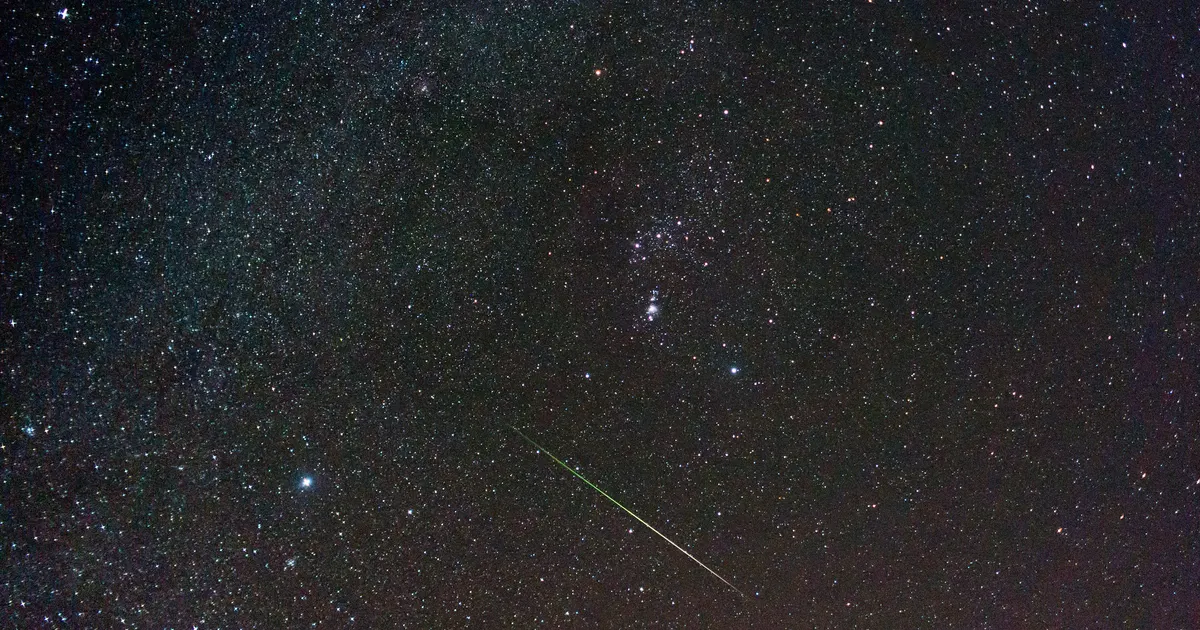
Yes, with patience. Put a camera or phone on a tripod, use the widest lens you have and take a long run of 15–30 second exposures aimed at a dark part of the sky. The more photos you take, the better your chance of catching a bright one.
What causes the Leonids?
The Leonids are dust left behind by Comet Tempel-Tuttle, according to the Royal Observatory Greenwich. Each November, Earth passes through that trail of debris. The grains burn up high in the atmosphere as fast, bright streaks, sometimes leaving short-lived glowing trails.
Missed it? The next big one is the Geminids in mid-December, usually the strongest shower of the year.